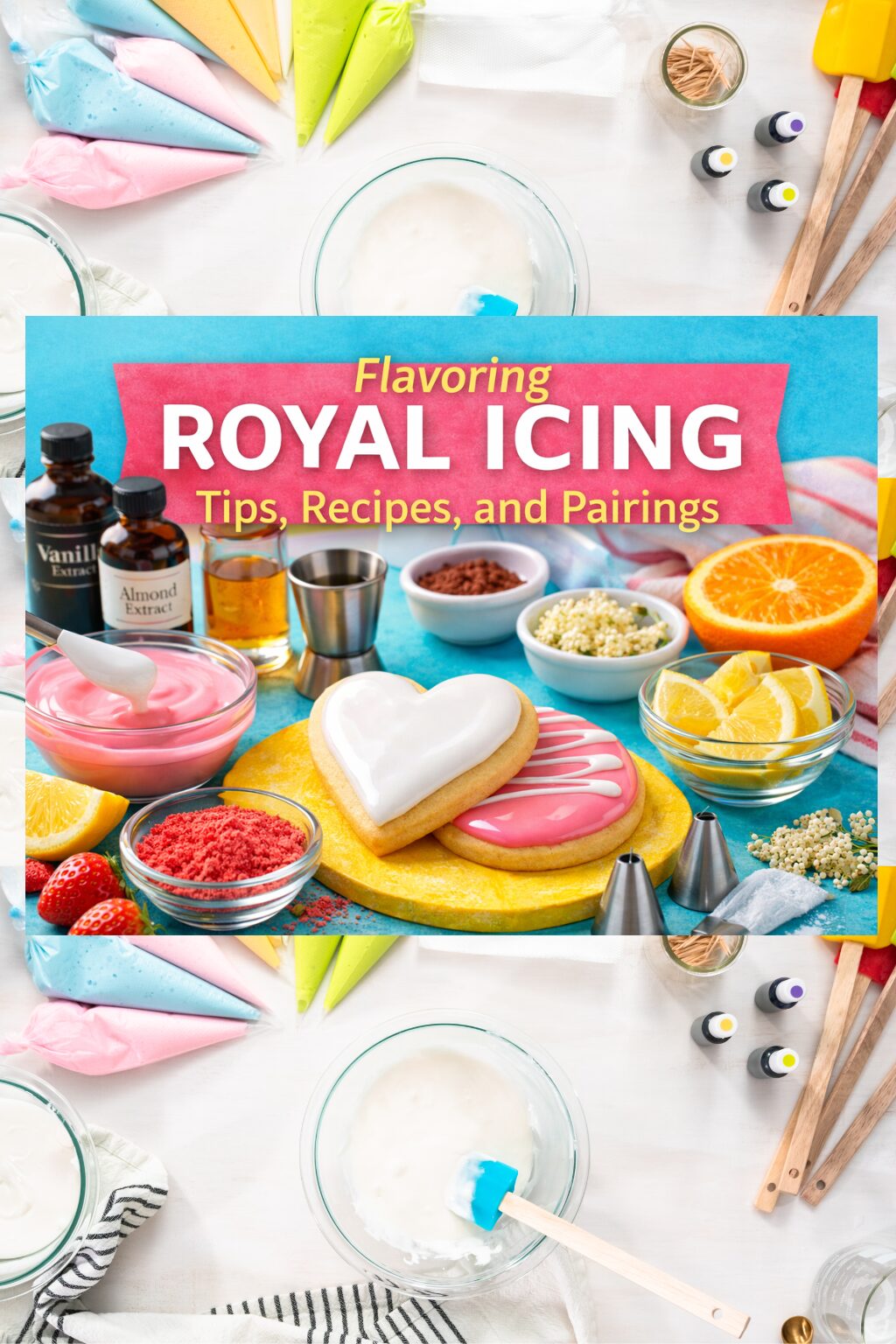
How to Flavor Royal Icing: Tips, Extracts, and Creative Pairings
This post may contain affiliate links.
Royal icing has a reputation for being beautiful but bland. Crisp, smooth, dependable—yes. Memorable? Not always. But it doesn’t have to stay that way.
With a little intention, royal icing can carry real flavor—bright, warm, floral, even slightly grown-up—without sacrificing structure, shine, or dry time. The key is understanding what works with royal icing instead of against it, then leaning into combinations that make sense for the cookie underneath.
Let’s talk about how to flavor royal icing properly, how to keep that clean snap and glossy finish, and how to move beyond plain vanilla without overcomplicating things.
(**Perfect, Easy to Follow (with Tips), Royal Icing Recipe at end of article 👇)
The Golden Rule: No Fat, No Oil
Royal icing relies on a stable meringue structure to set and harden. Fat breaks that structure down. Even small amounts can keep icing tacky, dull, or soft long after it should be dry.
That means:
- No oil-based flavorings
- No butter, cream, or dairy
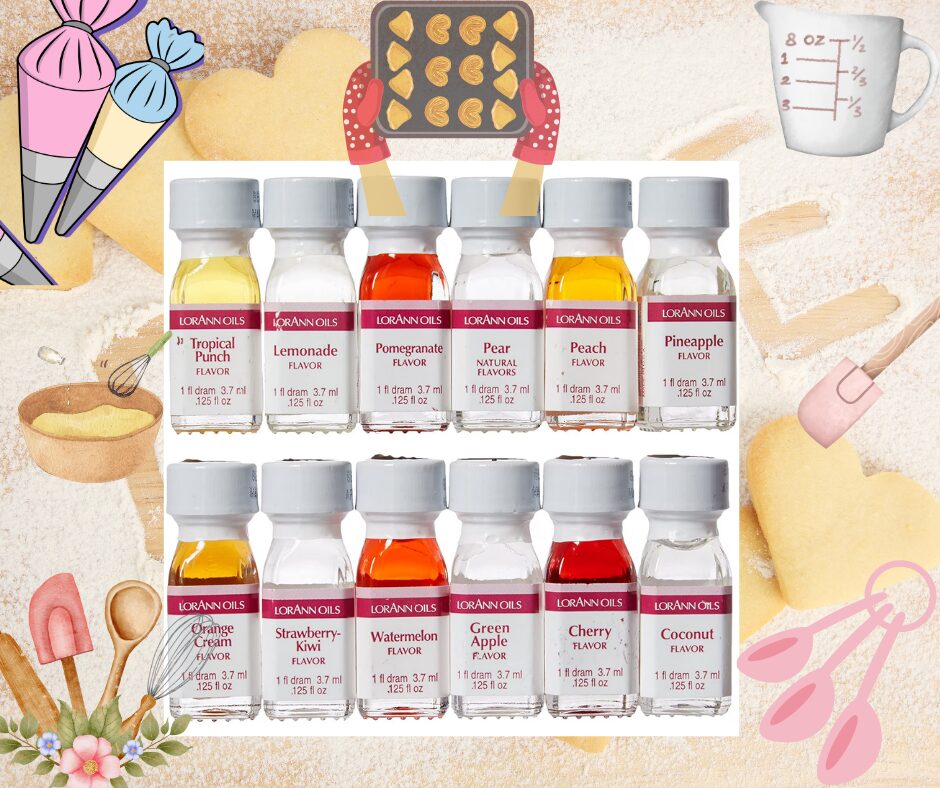
- No flavored oils, candy oils, or essential oils
Flavoring royal icing well is about choosing oil-free flavor sources that enhance taste without interfering with performance.
Extracts & Emulsions: Your Flavor Foundation
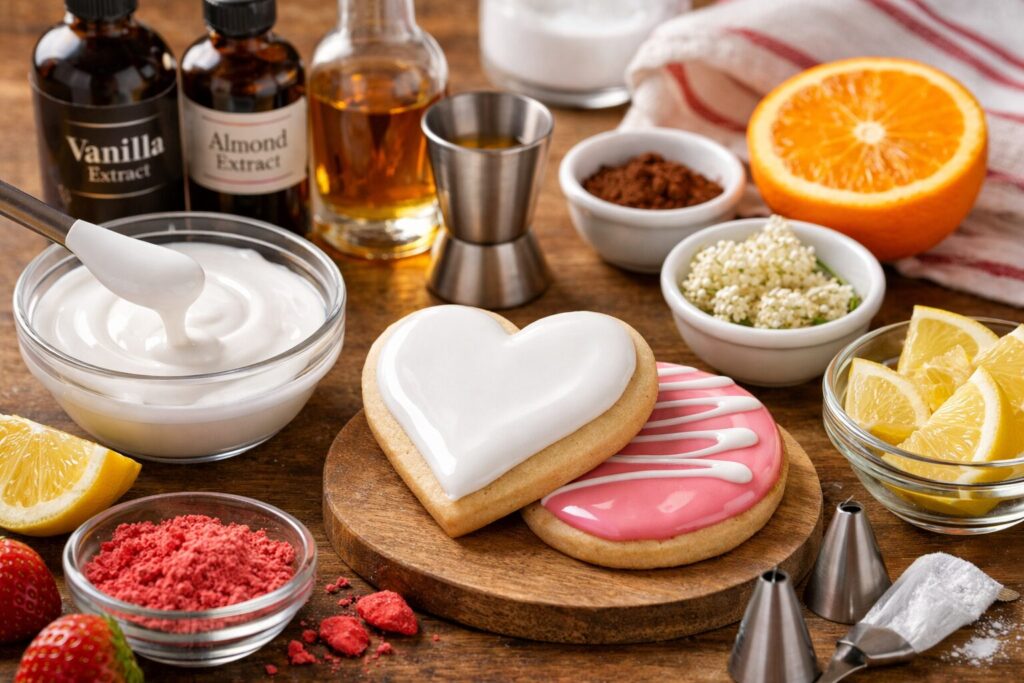
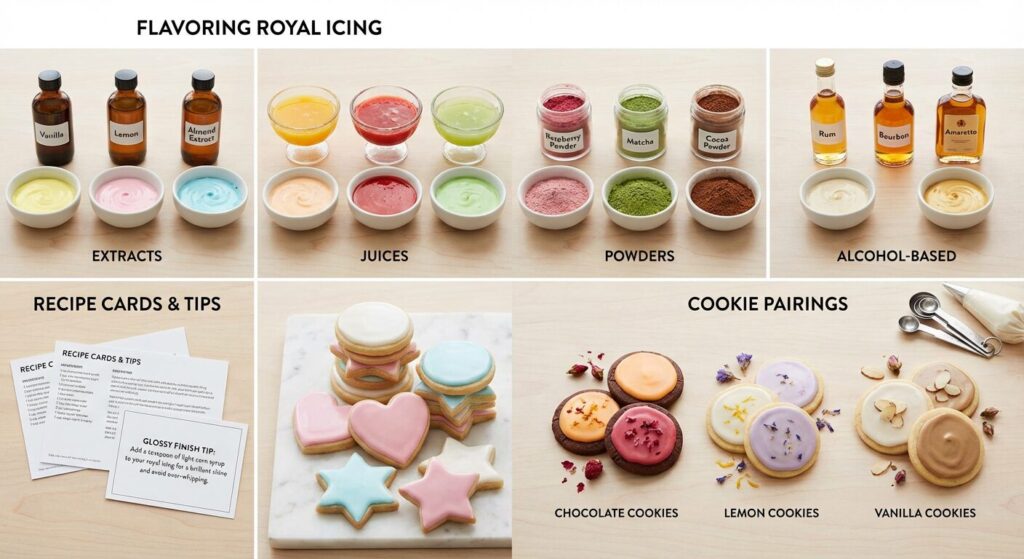
Extracts and emulsions are the most reliable way to flavor royal icing. They’re concentrated, easy to control, and don’t affect consistency as dramatically as juices or purees.
Classic Extract Choices
These are popular for a reason—and when used thoughtfully, they don’t taste boring.
- Vanilla: Softens sweetness and gives a familiar base. For bright white icing, clear imitation vanilla keeps color clean.
- Almond: Stronger than vanilla and slightly nutty. A little goes a long way.
- Vanilla + Almond: A classic combo that creates a rounded, almost marshmallow-like flavor that cuts through sugar.
- Butter extract or butter emulsion: Adds richness without fat. Excellent when you want a “buttercream-adjacent” feel without losing structure.
Seasonal & Warm Flavors
- Peppermint: Clean and cooling. Ideal for winter cookies and chocolate pairings.
- Maple: Warm and slightly smoky. Works beautifully with spice cookies.
- Caramel: Adds depth without sweetness overload.
- Coconut extract: Light and aromatic when used sparingly.
Emulsions tend to hold their flavor better through drying than standard extracts and often give a fuller taste without needing larger amounts.
Alcohol-Based Flavorings: Subtle Depth, Not Boozy Icing
Alcohol-based flavorings deserve a quiet mention because when used properly, they add complexity without altering color or texture.
A small amount of:
- Silver rum
- Brandy
- Bourbon
- Amaretto
- Orange liqueur
can deepen flavor and soften sweetness. The alcohol evaporates as the icing dries, leaving behind aroma and nuance rather than sharpness.
These work best when paired with vanilla, almond, citrus, or spice flavors. Think enhancement—not center stage.
Juices & Floral Waters: Flavor + Function
Liquids used to thin royal icing can pull double duty by adding flavor at the same time.
Citrus Juices
- Lemon juice is a classic for good reason. It brightens flavor, reduces perceived sweetness, and helps keep icing looking clean and white.
- Orange or lime juice adds personality but may tint the icing slightly.
- Always strain fresh juice to remove pulp.
Floral Waters
- Orange blossom water: Light, elegant, and citrus-adjacent.
- Rose water: Aromatic and refined—best used very lightly.
- Elderflower water: Soft and slightly honeyed.
Floral notes work best when paired with vanilla or citrus so they don’t feel overpowering.
Powders & Concentrated Flavor Boosters
Powders are an excellent way to add flavor without thinning icing.
Freeze-Dried Fruit Powders
- Strawberry
- Raspberry
- Blueberry
- Mango
These add authentic fruit flavor and natural color. Sift well before adding to avoid speckling.
Cocoa Powder
Cocoa introduces some fat, so chocolate royal icing may dry slightly softer, but it’s still workable. Dutch-processed cocoa tends to blend more smoothly.
Powdered Flavorings
- Lemon powder
- Espresso powder
- Chai spice powder
These intensify flavor without additional liquid and are especially useful for detailed piping work.
The Quiet Hero: Salt
A pinch of fine salt can completely change royal icing. It sharpens flavor, reduces cloying sweetness, and makes even simple vanilla icing taste intentional.
This is especially important when using fruit, caramel, or chocolate flavors.
Best Practices for Flavoring Royal Icing
- Start stiffer than needed: Flavorings and color will thin icing.
- Add flavor gradually: Taste as you go.
- Let icing rest briefly: Flavors develop after a few minutes.
- Test shine before committing: Some powders affect gloss more than others.
- Experiment with brands: Meringue powder and sugar brands affect flavor and finish.
A glossy finish usually comes from proper hydration, smooth mixing, and not over-aerating—not from adding anything special.

Recommended Flavor Pairings
Cookie & Royal Icing Combinations
Classic Pairings
- Sugar cookie → Vanilla + almond icing
- Lemon cookie → Lemon juice + vanilla icing
- Chocolate cookie → Vanilla-rum icing
- Gingerbread → Maple or caramel icing
- Shortbread → Butter emulsion + vanilla icing
Modern & Eclectic Pairings
- Orange sugar cookie → Orange blossom + vanilla icing
- Chocolate spice cookie → Cocoa + espresso icing
- Vanilla bean cookie → Rose water + almond icing
- Brown sugar cookie → Bourbon-vanilla icing
- Almond cookie → Amaretto-kissed vanilla icing
These combinations keep icing connected to the cookie rather than competing with it.
Final Thoughts
Royal icing doesn’t need to stay one-note. With thoughtful flavor choices and a little restraint, it can enhance the cookie instead of just decorating it. Whether you lean classic or experiment with florals, fruit, or subtle spirits, flavoring royal icing is less about rules and more about balance.
The structure still matters. The shine still matters. But flavor? That’s where personality shows up.















You May Also Like

How to Bake with Whole Wheat Flour (Without Dry or Heavy Results)
Small-Batch Baking Without the Waste: Smart Uses for Leftover Dessert Ingredients